Please visit Marketing Land for the full article.


Source Marketing Land - Internet Marketing News, Strategies & Tips https://ift.tt/2You7qV


What better way to display your brand’s human side to your customers than to showing the people behind your company? The arrival of Facebook Live changed the playing field for content development in the online world. More people than ever use live streaming, with Facebook video posts growing by around 94% a year in the US alone. If that wasn’t compelling enough, Facebook Live videos experience three times the engagement of typical videos shared on social media, with millions of users tuning in around the world.
If we look at the figures, Facebook Live currently generates more than 3,000 years of watch time every day. The question becomes how do you take advantage of that engagement for your brand?
Since Facebook Live is free and easy to use, any company can get involved. However, it’s critical to ensure your video strategy is in place before, during and after the broadcast. Here are 10 Facebook Live tips to follow:
Your community knows what they want and the easiest way for you to deliver high-value content to them is by asking them about what they want to learn. The easiest way to get people excited about a topic is by letting them pick the topic. Run polls, ask people directly what they want to see, or create themes based on questions and comments from the community.
While most of the content we post is followed up with consistent promotion, it’s important to remember live videos are more like an event than a blog post. In other words, you need to generate interest before the experience if you want to get that all-important viewership. The good news is Facebook lets you target certain events and groups with your promotions. This is perfect for a more focused advertising campaign.
A very simple way to do this is by creating an event. This way, you give people something that will create a reminder for the day of the event, as well.
Ultimately, you’ll want to push the upcoming announcement on your Facebook account as often as possible to start. Don’t just repeatedly tell your audience you’re going to stream. Every time you remind your audience, share something new of value. For instance, highlight a tip you’ll share, or what kind of information you’ll be covering.
Look at NASA Earth’s post for instance:
It’s full of value and even contains an image to spark additional visual interest. Keep in mind your Facebook efforts don’t exist in a silo either. Don’t be afraid to cross-promote across your blog, email campaigns and additional social networks too.
Though Facebook Live is a more laid-back and natural experience than a standard television ad or YouTube production, that doesn’t mean you shouldn’t plan ahead. Your activities on Live represent your brand, so you can’t afford to give a bad impression. This is particularly true since Live users watch videos three times longer than their counterparts.
Before you broadcast your video, take some time to prepare. Remember you can begin with a private broadcast for testing, and use that strategy to test your lighting, sound and other surrounding elements. Make sure you invest in a tripod to avoid the “shaky cam” experience. Also try to minimize any unwanted background noise and ambiance whether indoors or outside. When it comes to Facebook Live tips for preparation, a strong broadband connection can go a long way too.
In this video by Sephora, you’ll notice that the interview is held in front of a clean, non-distracting background, without any shaky cam in sight. All the while the colors and accessories present highlight the unique personality of the Sephora brand.
While you’re prepping for your big debut, make sure you take the time to think about how you’ll shoot your video and when you’ll stream it. For instance, when using the Facebook Live app for iOS, you can choose between broadcasting horizontally or vertically–depending on what gives you the best view.
Try a little of both options in a test run to see how you look for your audience. Sometimes vertical shooting can make you seem too close to the camera, which might not be ideal for an interview-based video. On the other hand, if you want to have an intimate behind-the-scenes chat with your audience, that could be exactly the vibe you want. In the video below, Martha Stewart uses a horizontal portrait to show more of her surroundings, which are from her own Martha Stewart Home Depot collection.
Another decision you will need to make is around whether you’ll use third-party tools or not. Things like ECamm or Stage Ten help you create an experience and are easy to use. There are many tools out there, so be sure to research which one is best for you.
The last thing about formatting is in how you’ll deliver the content. Do you want to be a talking head, just one person alone? Do you want to invite guests? If you do bring on guests, is it an interview format or a conversation? Ask yourself as many questions as you can think of, and then start to answer them. If you can’t answer all of them clearly, the premise might not be strong enough.
Timing can be everything when it comes to making an impression on your audience. Just as there are tips for when to send out email campaigns for the best responses, there’s also guidelines for times to host your videos. During a live-streaming event, the last thing you want is to schedule your video to appear when everyone in your target audience is at work or asleep.
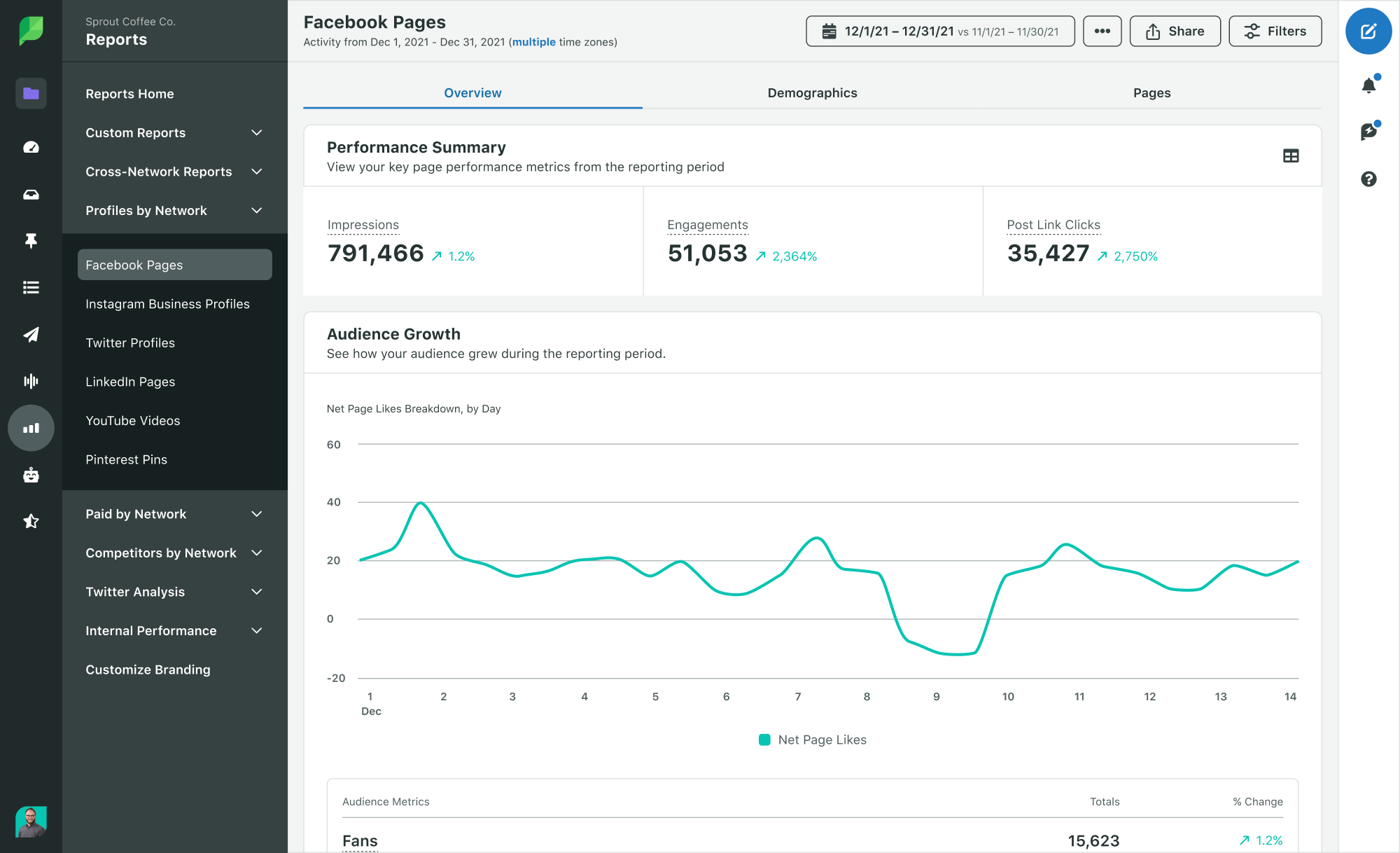
Make sure you think carefully about your target audience. Luckily, you can use Sprout Social’s Facebook reports to learn more about when your customers interact with you the most. Our Facebook Audience Growth report provides you with the tools you need to measure fan growth and post interactions.
You might naturally assume it’s a good idea to introduce yourself and any other speakers in the beginning of your video broadcast. After all, just like a blog post, your initial aim is to convince people to stick around. However, Facebook Live allows visitors to join the stream at any moment. So as more people come in, reflect on your introduction and let your audience know what’s happening. For instance, you may want to use lines such as:
“Hey, if you’re just joining us, welcome to our broadcast. We’re currently talking about [topic] and we’ve just covered [previous topic].”
You should also spend some time to set up the agenda and create an expectation for what they can expect. When people know what’s next, they’re more likely to stick around because there’s an interest in what’s about to be said.
One great example of Facebook Live that keeps its viewers on track is the video from the ASPCA. They launched a #31DaysofRescueDogs campaign to encourage adoption for their lovable furry companions. The Facebook Live video that promoted the campaign followed volunteers around New York as they took Pitbull puppies for a walk.
Throughout the entire broadcast, the host of the stream constantly reminded the people watching why the walk was happening and how they could get involved with the campaign. This helped to generate a huge number of donations from the ASPCA audience.
The live comments and reactions are part of what makes the experience so engaging to customers. It feels more like a two-way conversation when you’re responding directly to their questions in person. That’s why Facebook Live drives comments at 10 times the rate of non-live videos.
One of the most powerful ways to increase engagement online is to address the comments that appear live on air. This invites more people to share their opinions and thoughts as you go along. If you’re concerned that you might have too many comments to respond to in one stream, you can always get some help from someone off-camera to direct the most important comments your way.
Check out the video from Stephen Amell in his “Let’s Talk Arrow” post. He responds perfectly to the comments that come his way while keeping his audience engaged.
Remember, Facebook live is a window into your brand experience in real-time. Your responses to comments keep your audience in the moment. And with Sprout, you can manage Facebook messages all in one single-stream Smart Inbox.

Our tools help brands keep their messages in order across all platforms. However, with Facebook Live comments, it’s easy to track questions or respond to comments you might have missed–all within the same platform.
Another easy way to be interactive is to give shoutouts. Facebook Live videos are instantly archived after they’re finished. This means you can always call attention back to them if you want to share additional value with your audience. To help boost your viewership among people who didn’t join you for the live show, try sharing a quick post thanking people for watching.
You can also ask for new questions and comments to generate additional engagement. The people who view your videos like to feel appreciated, so show them some love wherever you can.

One of the most important Facebook Live tips to remember is this is your chance to really connect with your audience. In other words, you’re not trying to market yourself obnoxiously or sell a product. You’re trying to build relationships that lead to longer-lasting impressions. When you’re ready to broadcast, make sure you’re relaxed, smiling and feeling confident.
Of course, keep in mind that it can be useful to draw attention to your products or services from time to time, as long as you do it subtly. You can always end your video with a call to action or reference your services throughout the content. For instance, in a Trey Ratcliff video on Facebook Live, he talked his audience through choosing the perfect camera setup.
The idea was to allow Trey to build relationships, trust and thought leadership with his audience, while also pointing out his own incredible photography skills. The marketing was almost done on a subconscious level, which is what made it so effective.
If you do bring on guests, it’s a good idea to practice ahead of time so they’re more relaxed. Make sure you also spend some time directly ahead of going live with your guests. It will help get them into the mindset of being on camera and you’ll start from a great place immediately instead of warming up on the Live itself.
Who said your Facebook Live video only had to be promoted on Facebook? You can easily promote across your other social channels to get users to tune into your video on Facebook. You’re not always going to get everyone from Twitter, Instagram or LinkedIn to watch, but providing a link to the video will make it easier.
Tonight at 8pm ET: Join us for a Facebook Live where we'll answer your questions about @NASAHubble's Messier Catalog https://t.co/086Sh7QJMV pic.twitter.com/7uLbJRpyFj
— NASA (@NASA) October 19, 2017
Again, NASA does a great job cross promoting content for Facebook Live on Twitter. Feel free to post countdowns to your video or simply share afterward for more awareness.
Be careful not to overdo this, though. Your other social audiences might not be on Facebook and could come to resent your using a different platform to promote something they choose to not access.
Finally, as with anything in the world of marketing, you should always learn from what you accomplish. Facebook has several metrics that you can measure with your live videos. For instance, you can check out how many people you’ve reached, how many unique viewers you have and so on.

The more you learn about your viewer preferences from your social media analytics, the likelier you are to design and publish stronger videos in the future. You can even go through your results to find out how many people were watching at specific times. This is a great way to figure out which moments had the most impact on your audience.
Once you’ve learned as much as you can, use the data gathered to experiment and optimize your next video. Then A/B test your results just as you would with any other content.
It’s hard to argue with the potential of live streaming in a world where customers constantly crave stronger, more human connections with their favorite brands. Since its launch in 2016, Facebook Live has seen its daily watch time grow by more than 400%.
Facebook Live broadcast makes it inherently compelling to users who check out social media for the latest updates and trends. We’ve even seen other social media platforms begin to adopt the same solution to take advantage of the growing popularity of live streaming.
Fortunately, with the Facebook Live tips above in mind, you should have everything you need to start your broadcast on the right track. Live streaming offers a flexible and immediate way to connect with your audience as part of your overall Facebook marketing strategy.
This post 10 Facebook Live Tips to Follow Before, During & After Your Broadcast originally appeared on Sprout Social.


Thinking of diving into Facebook ads? Wondering what the common pitfalls are? In this article, you’ll discover three important considerations when starting your first Facebook ad campaign. #1: Commit to a Facebook Funnel Implementation All successful marketing starts with a clear strategy and Facebook advertising is no exception. With a strategy built around your available […]
The post Beginner’s Guide to Successful Facebook Ads appeared first on Social Media Marketing | Social Media Examiner.

Just like life, social media strategies have ups and downs. If you’ve been chugging along, outperforming benchmarks, garnering high engagement and reaching all your goals, but then hit a bump in the road, don’t panic. When your content or campaigns stall out, it’s time to put your thinking cap on.
There are a lot of reasons why you might not be seeing the return on your social content that you’d like. When you hit a plateau, it may be time to rethink your approach, look at your reports with fresh eyes, create tests, or make the case for new and different content.
One thing every marketer knows is that things are always changing on social media. New trends emerge every second, consumer needs evolve with the times and social media platforms change their features, algorithms or other standards. It can be difficult to keep up, but if you noticed a plateau or dip in followers, impressions, engagement or other metrics you use to measure success, it’s important that your strategy accounts for any changes that have taken effect. Here are a couple of questions to ask yourself if you’re looking to reinvigorate your followers:
Social media practitioners are hyper-focused on understanding their audience, but if you’re not using data to confirm who your audience actually is, it’s difficult to craft effective content.
For example, if you’re tailoring your Tweets for a Gen Z audience, but the majority of your followers are actually 35-44, it’s time to mix up your messaging. Or perhaps, your audience is made up of mostly women, but your goal is to engage with a more gender-diverse crowd. Having a better grasp on your demographics and marketing personas, and how they evolve, can help revamp your strategy.
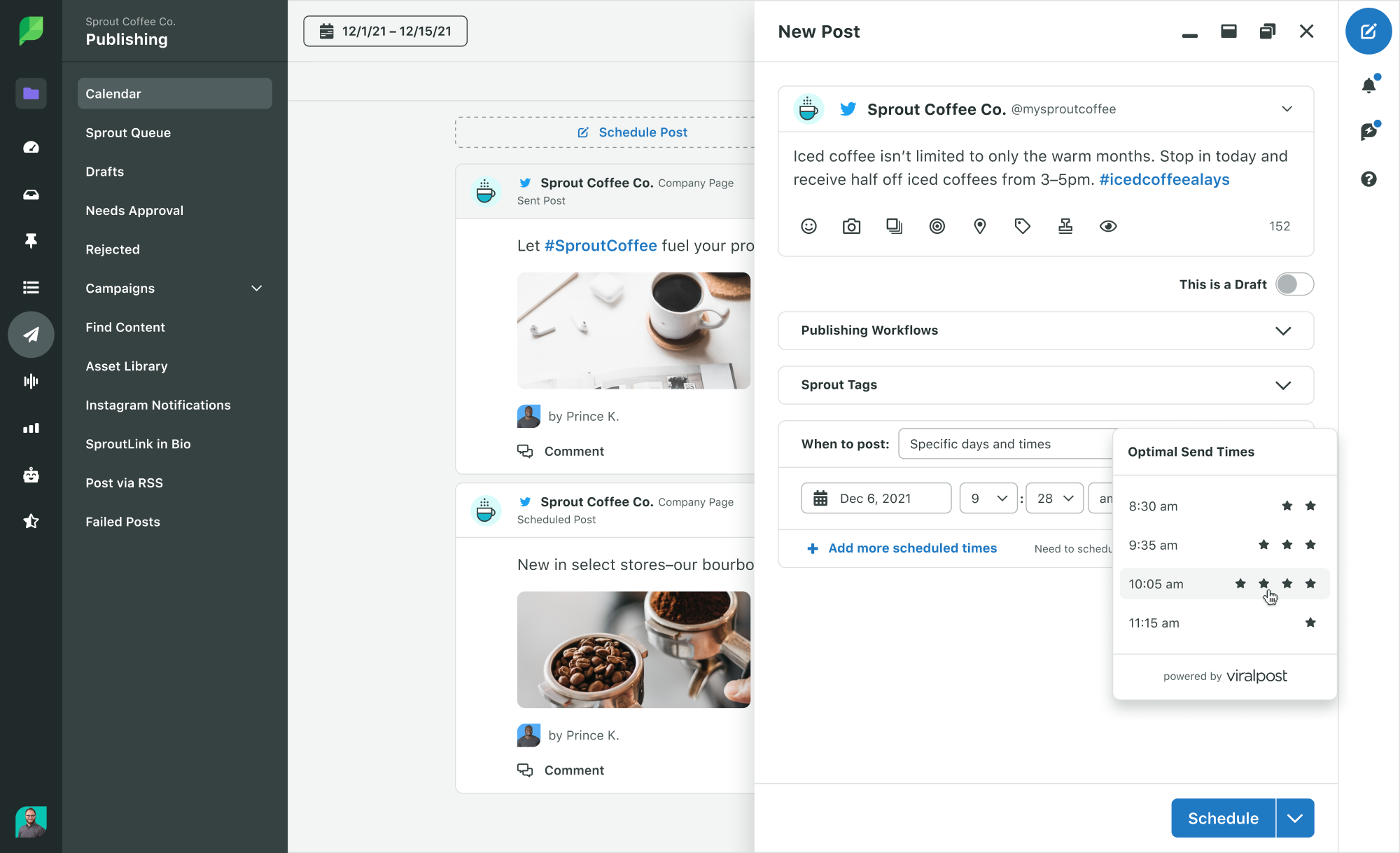
If engagement or simply getting eyeballs on your content has been a challenge lately, knowing when to post might help. In addition to Sprout’s comprehensive list of the best times to post, our ViralPost® technology takes the guesswork out of scheduling by automatically calculating the optimal send times for your content.
If you’re not seeing the engagement you’re used to, or your followers took a dive overnight, you might not alone. Social platforms make changes to their algorithms and standards frequently which can change how paid and organic content are prioritized in your target audience’s feed. Now, on nearly all platforms, chronology has fallen by the wayside and relevancy is king.
We have not made any recent changes to feed ranking, and we never hide posts from people you're following – if you keep scrolling, you will see them all. Again, your feed is personalized to you and evolves over time based on how you use Instagram.✌️
— Instagram (@instagram) January 22, 2019
A lot of platforms will update users about these changes, but it’s not always immediately clear how marketers can crack through the algorithm. When Facebook announced that it was making changes so personal moments don’t get lost in the noise created by brands and businesses, it became clear that marketers would need to prioritize content that leads us to connect more with one another.
Even if a social media platform doesn’t come right out and give you the keys to the algorithm changes, it’s clear that relevance is important, but so are authenticity and human connection. There’s no surefire way to make sure your posts are at the top of every feed, but you can create content that is hyper-relevant and tailored to your target audience.
During COVID-19 consumer behavior has changed dramatically, which is a common occurrence during national or global crises. The same was true following 9/11, the 2008 recession, etc. In those instances when tensions and emotions run high, your content might not resonate in the same way.
If your audience has disengaged, think critically about how current events might be affecting them and what content they might be sensitive to. When life throws curveballs, human connection is the most valuable thing a brand can offer its community.
That's why we're offering 30-minute one-on-one consultations with our shop managers to help discover the best products for your skin, hair and body, along with tips on how to use them for best results.
— Lush North America (@lushcosmetics) April 17, 2020
While you might want to find ways to immediately improve those KPIs, instead focus on one-to-one engagement and building real relationships with your followers that will last into the new normal—whatever that means.
When you’ve hit a plateau, your month-over-month changes are stagnant, you’ve lost followers, website traffic has stalled or whatever the case may be, your social data tells a story that will help answer why and how to bounce back.
Take a look back at your reports and try to pinpoint specific moments where your content didn’t perform as you’d hoped and where it outperformed your expectations. Sprout’s reports visualize activity in a digestible way that makes peaks and valleys easy to spot.

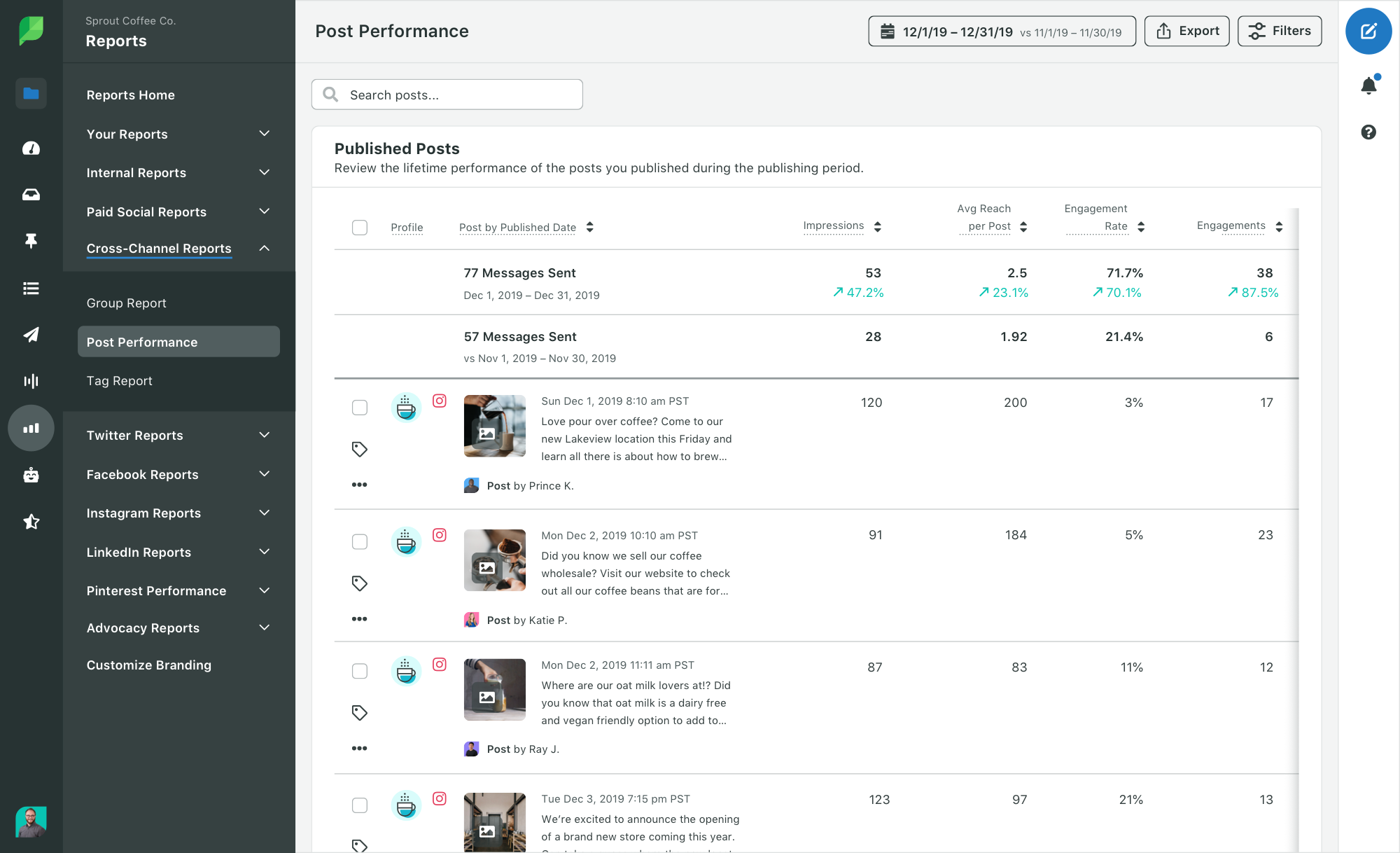
On the days where you notice peaks, hone in on what content or campaign was fueling that fire. Dig deeper in Post Performance Reports, which break down each post’s impressions, reach, engagements, engagement rate and more. Sort your messages by the metric that’s your top goal and compare the most successful content to the low performers.
What worked for those top posts? Did the lower-performing posts lack a strong CTA? How do the language and creative elements compare? What feedback did your audience give on those posts? Ask yourselves these questions and apply your findings to your next wave of content.
Listening to your audience is always important, especially when you’re noticing a dip in your KPIs. According to the Sprout Social Index: Empower and Elevate, 43% percent of all social marketers say a major challenge is identifying and understanding their target audience. Creating content that supports your goals is pretty tough when you don’t understand who you’re talking to. To address this concern, marketers should turn to social listening.
Social listening tools analyze trends in overall discussion about your brand, industry, competitors and more. If you’re struggling to understand what your audience really wants, this can show you what they are talking about, sentiment, keywords and trending topics. Tapping into those conversations is a great way to get a sense of how you can tailor your content to the specific wants and needs of your audience. If you’re already sold on the value of listening, download this cheat sheet to build a listening strategy.
If you’re struggling to reach your target audiences through organic social posts, it might be time to introduce a paid strategy. On Facebook, organic posts only reach about 6.4% of your followers so it’s easy to get lost in the noise. Paid social can help brands to break through and connect with audiences that might have missed out on their content otherwise.
If you’re not ready for a full-blown paid strategy, boosting is a cost-efficient way to dip your toes in the paid pool. “If you have an organic post that’s working really well, you don’t even need to create a new ad. You can just put $50 behind it and see how reaching a wider audience impacts your goals and hypotheses,” said Shelby Cunningham, Sprout’s Digital Marketing Lead, in a recent interview. With a little boost, your content could see big gains.
If you’ve exhausted yourself trying to think of ways to repurpose your content or reinvigorate your strategy, it might be time to try something new. Creative testing can help your brand enhance ad campaigns before they launch, create more impactful creative assets and understand which concepts your audience is loving and which they aren’t.
If your company gives you a bit of freedom to explore new creative avenues, go for it!
You vs. the moon she told you not to worry about https://t.co/FN4WacuT44
— MoonPie (@MoonPie) March 9, 2020
If you could tweet for us, what would you say?
— Stouffer’s (@stouffers) April 14, 2020
As a social media practitioner, it’s easy to get emotionally invested in your strategy, wrapped up in your social data and begin equating KPIs to your own personal success. It’s important to remind yourself that social media is fickle and a tricky thing to master.
Month-over-month comparisons of raw data don’t tell the full story. If you’re feeling down when you see a drop in impressions, followers or other metrics take a look back at how far you’ve come. Celebrate your successes. If you put a lot of work into a campaign that didn’t convert as expected, that doesn’t mean you are a failure. Rather than internalize that, focus on what you can learn from that experience.
i remember thinking “no way i’ll ever top this viral thread” 1.5 years ago but somehow the steak stars aligned again. i’m simultaneously grateful for the outcome and troubled at myself for perpetuating the personification of a meat corporation
save me, cognitive dissonance https://t.co/As8lmVudgY
— Nathan Allebach (@nathanallebach) April 9, 2020
Trends might emerge overnight, but a strong strategy and flawlessly functioning team do not. If you’ve recently restructured and your social media team has either shrunk or grown, be patient as you adjust.
If you’re flat out feeling overwhelmed, you’re not alone. Taking care of your mental health while working in social media can be challenging when it feels like you have to constantly be plugged in. Consider reaching out to other social marketers directly or joining an online community where you can ask how others have dealt with mental stress or burnout.
Times change, people change and social media data, trends and platforms definitely change. When that affects your content, look at it as an opportunity for professional growth. With a little investigating, some fresh content and a pivot to your approach, you can jumpstart your metrics and get them moving in the right direction.
This post What to do when your content stalls originally appeared on Sprout Social.


For some social media managers, reporting comes with the job. For others, leadership may have a more hands-off approach, expecting the social team to “just put this on social.”
But making social media work is work, and measuring whether it’s happening requires at least a little analysis. Performing this analysis, and sharing it with managers, colleagues and leadership via a social media reporting system helps gauge the success of social marketing efforts and demonstrate that success to stakeholders.
Social media managers have much to gain from reporting, even in organizations where it isn’t expected. In fact, establishing a social media reporting cadence can help you overcome some of your biggest challenges.
According to The Sprout Social Index XV, social marketers by a long shot wish they could influence sales teams more than any other. Fifty-nine percent want to influence sales, double the number who want to influence either HR or lead generation teams.

In addition to craving more influence, social marketers also struggle to secure the budget and resources they need. Sprout’s research reveals that 33% of social media practitioners and 31% of social media leaders have this issue.

To resolve these shortages of influence, budget and resources, social media managers need data on their side. They also need to know how to present that data in a digestible way for others. Translating likes and shares into desired outcomes is the difference between an organization knowing they have a social media presence, and knowing that presence produces measurable results.
That translation requires a social media reporting system. A solid system is comprised of:
Your social media reporting cadence is your frequency; do you want to report weekly? Monthly? Quarterly? Perhaps different audiences—yourself, the team, management, leadership—benefit from different cadences. How often will you do a deep dive into reports? How often will you “spot check” for major swings? When do key metrics need to shift? We’ll suggest some tools to help figure all this out further down.
Social media managers have a unique understanding of how social marketing works. With a social media reporting system, you can foster understanding among other teams and stakeholders.
Is it worth taking on regular reporting if no one’s asking for it?
We think so. At minimum, a social media reporting cadence reveals what’s working and what isn’t on an ongoing basis so that you can make informed decisions. An uninformed social media strategy, after all, is a shot in the dark. Regular reporting sheds light on where your energy is best spent.
For example, the moment you see that a particular type of content performs better than others, you can begin leveraging that information and tailoring future content to maximize results. Then, you can track those results to make sure the pivot is paying off.
Additionally, a social media reporting system can help secure buy-in from decision-makers. Think hiring a video intern or increasing the budget for boosting posts would be a game-changer? You’ll need to convince leadership, and that’s best done with data.
For many social media managers, sharing data with sales is already a part of the job. In fact, sixty-five percent reported sharing data with sales in the Sprout Social Index.

Despite this, social marketers still crave more influence with sales teams. To close the gap, we need thoughtful data storytelling focused on audiences’ desired outcomes.
Not every stakeholder has the insight you have for interpreting social data. Churning out a spreadsheet every month or quarter and expecting others to decipher it isn’t likely to go far. Your reporting will need to go a little deeper, telling a story with the data to foster understanding and providing clarity around next steps that both your team and the reader can take. You’ll also want to use reports to document your wins and accomplishments along the way.
An interpretive social media reporting system will have a much greater impact than providing numbers without context, and increase your odds of garnering the influence and budget you need. Down the line, this reporting and documentation will also come in handy for conversations about things like career advancement.
Let’s explore an example of what social media reporting might look like.
While you may understand the value of engagement metrics, sales team members are more familiar with tracking things like win rates and deal size. You can meet these team members where they’re at by focusing on the places where social and sales collide. Ultimately, your common goal is serving your customers. Social data overwhelmingly tells you what is important to your audience. Your sales team needs to know that in order to make their offerings, outreach and conversations as valuable as possible.
For example, perhaps highlighting an advanced service on social platforms resulted in a measurable uptick in social messages from enterprise-level leads requesting more information. Once you have team members’ attention with a number that speaks to their goals, it’s easier to delve more deeply into how your specific social strategy fuels these successes and why intentional collaboration is important. It also begins to reveal the person “behind the curtain,” you, pulling the levers and turning the knobs that produce these results.
We can complain internal stakeholders “don’t get social” or we can bring them along
A few tactics our team deploys:
Daily huddles w emailed report out
Monthly creative brainstorms
Quarterly calls: lessons & wins
Agency-led webinars
Data Data Data
Preach
Preach
Preach— Jen Hartmann (@jenalyson) March 5, 2020
This same approach can be applied to managers and your organization’s leadership. Consider your internal audience’s perspective, and what your social strategy does for them. Highlighting your accomplishments and contribution to the organization’s success earns the influence so many social marketers seek. In turn, it becomes easier to ask for more of what you need or to suggest big changes, like a new direction for content.
At the end of the day, your organization’s leadership has the final say on big decisions. A social media reporting system creates a cadence for conversations with managers and leaders alike about valuable information.
If the idea of creating a social media reporting system seems overwhelming, fear not. There’s no need to reinvent the wheel. Some of the ways we share social media reports at Sprout include:
Here’s an example of one of our project results updates in Slack. Olivia is a Social Media Specialist here and shared this in our Always On project channel so the video, design, copy and marketing team members who worked on this project could see the initial reception. As you can see, sharing data doesn’t always have to be formal! Think about your audience and what they need to know before determining whether a quick Slack message or a formal social media presentation is the best way to catch their attention.

To learn more about the types of reporting and insights you can share, and formats you can use to present them, check out Sprout’s toolkit, Reach a Higher State of Marketing with Data. In it, you’ll find interactive worksheets for social media audits and competitive analysis, and even a cheat sheet for the best times to post on social.
With the right tools and a little time, reporting on social media can become like second nature. As data informs and improves upon social marketing decisions, social media managers can gain the influence and resources needed to double down on strategies and grow professionally, setting the stage for everyone’s future success.
This post Why you need to share social media reports, even if no one’s asking for them originally appeared on Sprout Social.


