Udemy

الأربعاء، 1 أبريل 2020

How to build a brand with celebrity social media management

Celebrities dominate social media.

Total understatement, right?

Heck, celebrity interactions represent some of the most engaged-with posts on social at large.

Couple that with the fact that nearly all of the most-followed Instagram accounts belong to celebrities (minus Nike, National Geographic and Instagram themselves).

katy perry instagram followers

That said, those millions of followers and interactions don’t happen by virtue of being “famous.”

And if you’re responsible for celebrity social media management, you know this all too well.

Much like traditional brands on social media, celebrity accounts are responsible for coming up with a content strategy that engages their target audience.

In this guide, we’ll break down the basics of celebrity social media management and how the big names out there score engagement.

How does celebrity social media management work?

Spoiler alert: not all celebrities are responsible for their own social accounts.

Well, at least not all the time.

Although some celebrity social media accounts might seem like random musings and updates, others are centered around specific promotions, shout-outs and announcements.

For example, it’s probably safe to say that this tweet from Harry Styles was actually written by Styles himself.

However, this promo was more than likely handled by a social media manager.

Celebrity social media management represents a sort of balancing act between marketers and their clients. Although celebrity accounts are almost always entertaining, there’s also the “business” aspect of anyone in show business.

New releases. Tours. Events. The list goes on and on.

Here’s some insight from Connie Chan, Manager of Social Strategy and Marketing at Warner Music Canada, on how the relationship between a social manager and an artist typically works:

“It really depends on the scenario of the post and how comfortable the artist is with social media.

We’ve dealt with a variety of artists who are super comfortable with taking charge of their own accounts and sharing all the content created by labels or themselves.

There are other artists who prefer the label to post only marketing assets on their behalf.”

In short, social media managers are often responsible for adopting their celebrity clients’ voice and working alongside that client to make sure their social presence is “on brand.”

And in the case where you can’t tell whether or not a celebrity runs their own Twitter or Instagram account, well, that’s kind of the point.

The importance of voice for celebrities on social media

Much like a distinct brand voice helps companies stand out from the crowd, the same can be said for the tone and personality of a celebrity on social media.

Chrissy Teigen might be the best example of someone with a distinct, consistent social brand.

Teigen’s off-the-cuff and often humorous tweets often don’t feel like they were written by a celebrity at all. Her human approach to social has made her all the more endearing and relatable to her millions of followers.

Meanwhile, someone like Mark Ruffalo adopts a more subtle tone while posting the sort of behind-the-scenes content we’d see from a celebrity account.

However, Ruffalo’s account also isn’t afraid to get political or highlight his activism. In a day and age where brands get real, celebrity accounts are expected to do the same.

And so celebrity social media management isn’t about who can be the funniest or post the craziest pictures. Just like brands have different goals and audiences, so do celebrities.

The role of a social manager for a celebrity is to determine what those goals are and how to reach them while communicating with thousands or millions of followers.

How do celebrities and their social managers come to a consensus about what to post, though? They talk about it.

Here’s more from insight from Chan on how marketers achieve a celebrity’s voice:

“To get the best results for managing several social accounts, our team plans a meeting with management and artists face to face to discuss the tone and how they prefer the accounts to be taken care of.

Some artists are very hands-on with day-to-day posts and content, whereas some prefer the social team to dive in and assist with copy and branding.

To make sure we get the best results and stay consistent with the artist’s voice, we send out copy for any social posts in advance to be approved by management.”

Celebrity social media content and best practices

Beyond voice, what types of content should celebrities and their social managers focus on?

Good question! There is no “right” answer, but below are some of the content types that keep followers engaged and on their toes.

News, updates and hype posts

Simply put, if someone followers a celebrity then they want to know what’s going on in their lives. This includes day-to-day updates and likewise big announcements.

For example, most celebrities will hype up their upcoming appearances to build anticipation and get more eyes or ears on whatever they’re doing.

Some celebrities work overtime to keep the hype train going. For example, Lady Gaga took to Twitter days, hours and even minutes before dropping “Stupid Love,” much to the joy of her fans.

Behind-the-scenes content

Another incentive for following a celebrity is the ability to go behind-the-scenes and get sneak peeks of their latest projects.

For example, this backstage photo from the Stranger Things set racked up a staggering 2+ million likes on Instagram.

View this post on Instagram

🤙📷 @tinarowden

A post shared by Finn Wolfhard (@finnwolfhardofficial) on

Meanwhile, behind-the-scenes posts can be used by themselves to build up a sense of hype. Here’s a great example from one of blink-182’s relatively recent recording sessions.

View this post on Instagram

blink-182 studio life.

A post shared by Mark Hoppus (@markhoppus) on

These types of posts only require a snapshot or quick video on behalf of a celebrity but they can be gold in terms of engagement and buzz.

“Slice of life” content

Perhaps one of the biggest appeals of following a celebrity on social media is to see what they’re “really” like.

Whether or not the reality that celebrities put out there is actually their real lives is a debate for another day. The point is that many celebrities use social media as a channel to post non-promotional content that makes them seem more relatable and human (think: Chrissy Teigen’s tweets).

Sophie Turner’s Instagram Stories are a great example of this, showcasing random moments and snapshots for fans.

Instagram Stories are key to celebrity social media management as you establish a personal connection with followers

Here’s another great example from Kumail Nanjiani, making light of his recent viral photoshoot with a humorous tweet.

Conventional wisdom might tell us that celebrity social media management is all about one-upping other celebrities and trying to flex on fans. The reality? It’s oftentimes the opposite.

“Celebrity” snapshots

Of course, some fans do live for the glitz and glamour of the so-called “good life.”

This is where skills like learning how to take a good Instagram photo and write awesome captions both come in handy.

View this post on Instagram

The dog walker.

A post shared by Cardi B (@iamcardib) on

Not every celebrity post can be iconic, but coupling a photo with a stylish filter and clever caption makes it much more likely to go viral.

Heartwarming and inspirational content

The common thread between much of a celebrity’s content strategy is showing off one’s personality and human side.

Whether through philanthropy, charity or heartwarming moments with fans, celebrities can show that they’re about more than just money and fame.

This begs the question, though: which pieces of content are best for celebrities? Is it those random, off-the-cuff tweets? Photos on the red carpet?

The best way to figure it out is by digging through your analytics. Much like a traditional brand, Chan notes that celebrity accounts take full advantage of social media reporting and tools such as Sprout Social to spot their top-performing posts.

“We use the weekly and monthly reporting tools on Sprout to auto-send to all those involved with the artist accounts. It’s a great way to track how the profiles are doing and what type of copy or caption does best.”

reporting and performance analytics are key to celebrity social media management


How celebrities on social media interact with fans

The beauty of social media for celebrities is that it provides a platform for stars to interact with fans directly.

Celebrity social media management means shouting out fans and followers in addition to publishing your own content

Beyond likes and retweets, celebrities can drive engagement and interact with fans simply by asking questions.

Visiting a new town while on tour? Ask about the local cuisine. Looking for something new to watch or read? Again, ask fans!

Celebrities and their managers can keep an eye on mentions and DMs to figure out who to like and shout-out.

And remember:  while something as simple as a “Like” or retweet only takes a moment for a celeb, but could very well mean the world to a fan.

celebrity social media retweet

What are the go-to social media platforms for celebrities right now?

Good question! Platforms like Twitter and Instagram still remain the go-to communities for celebrities.

Twitter’s more or less been established as the hub for celebrity accounts since its inception. The fact that the platform pretty much thrives on trending topics and quick engagement make it perfect for celebs on-the-go or juggling huge followings.

Meanwhile, Instagram is prime for snapshots and photos. Combined with Instagram Stories, it’s the ultimate platform for giving fans a glimpse into your day-to-day life.

But also note that TikTok is emerging as a channel for celebrities.

celebrities on tiktok

Since the platform is still relatively young, celebs are still getting the hang of it. Acting sort of as a spiritual successor to Vine, it’s definitely worth checking out for stars whose audiences are part of the younger crowd. Either way, it’ll be fascinating to see how celebrities continue to adapt to the platform.


And with that, we wrap up our guide!

Do you have what it takes to build a celebrity brand?

Celebrity accounts are a staple of social media.

In fact, you’d be hard-pressed to find someone who doesn’t follow their favorite actors and musicians via social.

That said, celebrity-level engagement doesn’t happen automatically. It doesn’t happen by accident, either.

Celebrity social media management is a tough gig. Not only are managers responsible for entertaining a massive audience, but also keeping in mind their clients’ tone as they create and promote fresh content.

Looking to build a celebrity brand? Curious about what it takes to be considered “legit” in the social space? Make sure to check out our guides on how to get verified on Instagram and Twitter!


This post How to build a brand with celebrity social media management originally appeared on Sprout Social.


Source Sprout Social https://ift.tt/2qJevyM

How local businesses should be communicating with customers during COVID-19

Hear how local search veterans are using every channel available to help their clients stay relevant and keep customers informed.

Please visit Marketing Land for the full article.


Source Marketing Land - Internet Marketing News, Strategies & Tips https://ift.tt/3aBa8Zc

Google adds ‘public health emergency’ to inappropriate content ads policy

The change to the sensitive events section of the policy is effective immediately.

Please visit Marketing Land for the full article.


Source Marketing Land - Internet Marketing News, Strategies & Tips https://ift.tt/3dOcrKe

Announcing Discover MarTech: A Virtual Event For Strategies & Solutions

Continue your learning initiatives, engage with solution providers, and connect with the MarTech community — all from the comfort and safety of your very own desk.

Please visit Marketing Land for the full article.


Source Marketing Land - Internet Marketing News, Strategies & Tips https://ift.tt/2xHBpug

How to Connect With Consumers on LinkedIn: 5 B2C Examples

Does your business sell consumer goods? Looking for alternative ways to reach your B2C customers? In this article, you’ll discover how businesses in five B2C industries are using LinkedIn to connect with individual prospects and consumers. The Case for B2C Outreach on LinkedIn Although LinkedIn has traditionally been known as a B2B network, the platform […]

The post How to Connect With Consumers on LinkedIn: 5 B2C Examples appeared first on Social Media Marketing | Social Media Examiner.


Source Social Media Marketing | Social Media Examiner https://ift.tt/3dLEuKw

الثلاثاء، 31 مارس 2020

Martech platforms reduce costs as CMOs face budget cuts

Many platforms are already making concessions to help marketers by reducing costs and, in some cases, even suspending billing.

Please visit Marketing Land for the full article.


Source Marketing Land - Internet Marketing News, Strategies & Tips https://ift.tt/2w6KdcU

COVID-19 stories: Marketers, martech firms pivot as world goes online

Here are some encouraging stories from marketers who made quick changes to adapt.

Please visit Marketing Land for the full article.


Source Marketing Land - Internet Marketing News, Strategies & Tips https://ift.tt/39wQKv5

Social media crisis plan: What to do when things go wrong

If you’ve never had to respond to a social media crisis, consider yourself lucky.

The reality, though? Businesses both big and small need a crisis plan.

Because social media meltdowns, pile-ons and controversies aren’t just reserved for the biggest companies anymore.

Recent engagement statistics highlight just how quickly social media moves for modern companies. When you’re always dealing with a flood of @mentions, messages and updates, it’s clear how mistakes can get made and spiral out of control.

Meanwhile, the ongoing coronavirus pandemic highlights the need for a social media crisis management plan. Brands must be more mindful than ever of customer empathy and how they carry themselves during troubled times.

This guide breaks down the basics of handling a social media crisis and tips to prevent problems in the future.

What constitutes a social media “crisis?”

Hey, fair question.

In short, a crisis represents any social media activity that potentially hurts your brand’s reputation or ability to do business.

Bear in mind that a “crisis” is much more than just a single negative comment or customer complaint. Indicators of a crisis could be anything from a flurry of negative comments to an outright boycott of your products.

Also, note that not all crises are totally within your control as a marketer.  They can happen no matter how careful your brand is with its messaging.

How so? Let’s look at some social media crisis examples below.

Insensitive, out-of-touch or tone-deaf comments

Perhaps the most common–and preventable–type of crisis that comes from saying something offensive or insensitive.

We see such snafus often from celebrities. Chalk it up to a lack of self-awareness or not having a second opinion to say “Hey, maybe you shouldn’t post this.”

Consider the recent backlash from Vanessa Hudgens’ insensitive comments on Instagram Live regarding the COVID-19 crisis. Note that Hudgens is among one of the most-followed celebrities on Instagram with over 38 million followers.

Questioning the effectiveness of shelter-in-place orders and playfully commenting “Like, people are going to die” was both out-of-touch and irresponsible, to say the least. Hudgens has since walked back her comments and “apologized,” although damage to her reputation has certainly been done based on the replies.

Errors in judgment aren’t just restricted to celebrities. For example, the Indian branch of Dutch airline KLM had to apologize for a now-deleted insensitive tweet regarding the fatality rates on airplanes based on where passengers are sitting during a flight.

The fact that the back seats on a plane are technically the safest may not be offensive on its own. However, presenting death rates as a “fun fact” with a #TriviaTuesday hashtag is definitely in poor taste.

Product fails and customer criticism

Social media and community managers serve as the sort of mouthpiece for their respective brands online.

And if a product you’re putting out doesn’t deliver or results in bad press, you’re going to be taking the brunt of the criticism.

As highlighted by Refinery29, a number of beauty influencers and YouTubers took to social media in 2020 to speak out against DevaCurl products after previously promoting them to followers and fans.

Plus, a corresponding Facebook Group with more than 59,000 members cited hair damage and loss from using DevaCurl.

This controversy highlights the big-picture impact of social media crisis management. For example, front-page Google results for “DevaCurl” include coverage of the controversy as well as the video noted above.

DevaCurl has publicly addressed the allegations against their products, but the visibility of the issue won’t disappear immediately.

Employee errors and bad behavior gone viral

As noted earlier, sometimes a crisis occurs due to something completely beyond a social manager or marketing department’s control.

For example, Cynet Systems had to completely delete their job-centric Twitter account and apologize for a job posting on LinkedIn seeking a “preferably Caucasian” candidate in 2019. Regardless of who was responsible for the listing itself, the brand apologized but was understandably dragged on Twitter for the error.

Another example comes from Walmart in 2017 in which an image went viral depicting a “back to school” promo in front of a store’s firearm display. Regardless of the origin of the photo and whether it was some sort of prank or staged incident, their social team was pressed to respond.

Site outages and broken links

Although there’s sort of a gray area on what sort of outages constitute a “crisis,” they can definitely become bigger problems if you aren’t paying attention.

Let’s say you’re in the midst of a product launch and your site goes down. Or maybe you’re promoting an irresistible offer to your customers and your links are broken.

If so, an explosion of @mentions and complaints could very well come your way.

The good news is that these sorts of crises are the easiest, granted you’re equipped to respond and fix the issue in a timely manner that satisfies customers’ needs..

Real-world crises, global events and tragedies

To say that we live in unprecedented times is an understatement.

These days brands need to be prepared for anything. The real-time crisis management efforts we’re seeing from companies in response to COVID-19 is proof of that.

From pandemics to tragedies and beyond, brands need to be aware of current events and respond in a way that’s tasteful and not tone-deaf.

In some cases, that might mean putting your social marketing on pause or shifting focus. In other cases, it may be the best channel for communicating with customers.

How to respond to a social media crisis

Listen: we’re not trying to freak you out or scare your marketing team.

Businesses today need to be proactive. Given the constantly “on” nature of businesses today and the unpredictable nature of life itself, it pays to be prepared.

Now that we know what common crises are out there, let’s talk about what it takes to respond to one when it does occur.

React quickly and swiftly

A response time of 12 hours is considered the norm when it comes to questions and concerns on social media.

However, social media crisis management means responding as quickly as possible. The sooner you’re able to react and quell any sort of controversy, the better. Whether that means deleting a post or issuing an apology depends on the situation.

Either the way, it all starts with keeping a keen eye on your notifications and @mentions to keep a negative feedback loop from forming.

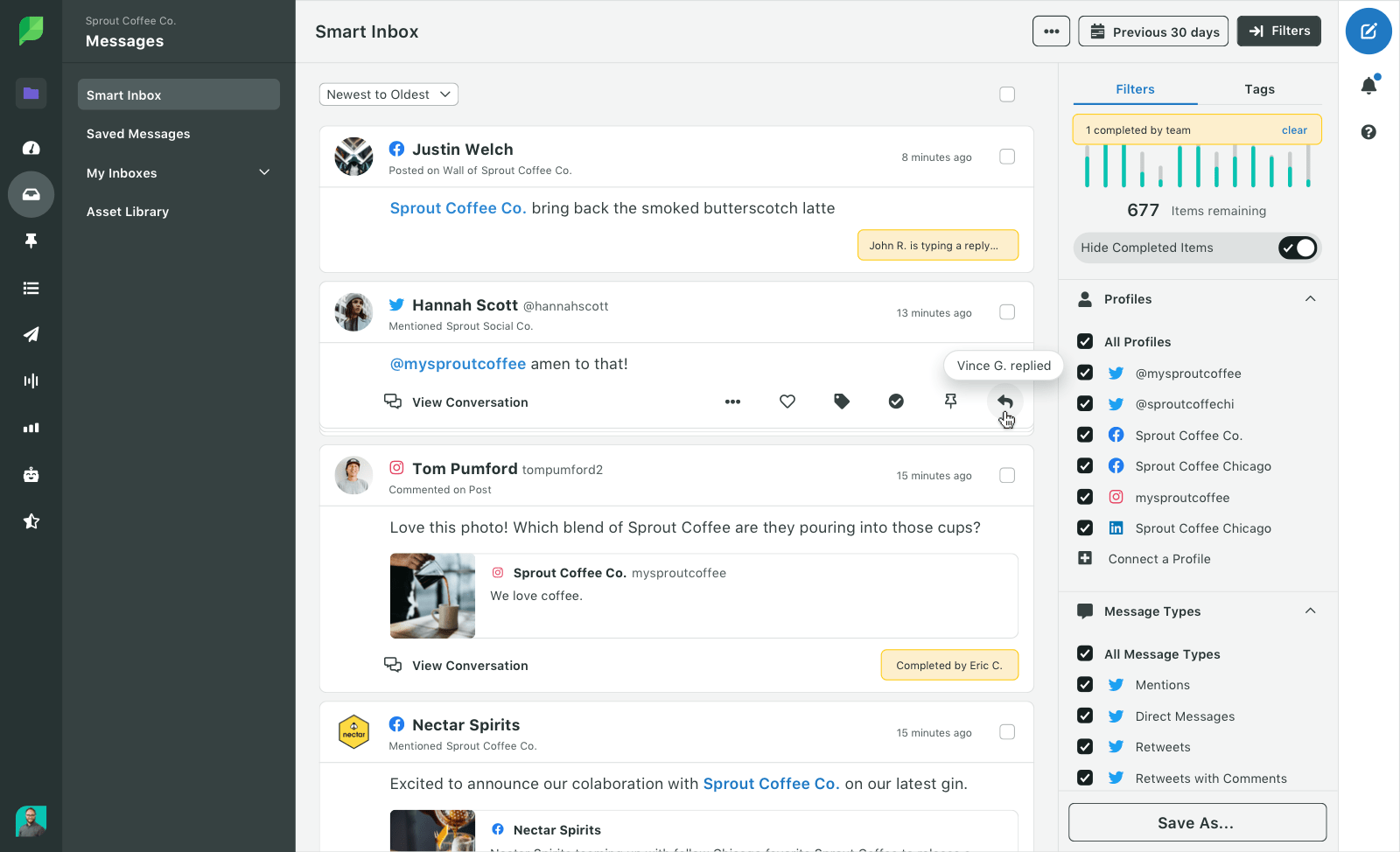
This doesn’t mean staring at your social feeds 24/7, thankfully. For example, social media engagement tools like Sprout can notify you of engagement spikes and spot a potential crisis before it has a chance to snowball.

smart inbox messages alerts

Stop automated posts and take control of your account(s)

Another smart move is halting your automated posts during a crisis, at least temporarily.

For example, restaurants and venues in areas with shelter-in-place orders obviously shouldn’t be advertising sit-down meals and parties. Such posts feel out-of-place and insensitive during a crisis when people are focused on their well-being versus buying.

If you’re managing your social accounts in Sprout, hitting the proverbial pause button can be done in a single click. The ability to pull this sort of emergency lever is especially useful if you’re juggling multiple clients or accounts.

In extreme cases, social media crisis management means putting a top on your social presence for a moment

Assess and apologize if necessary

If you find yourself in social media crisis management mode, it’s only natural to want to get things “back to normal” as quickly as possible.

But if there’s one aspect of a crisis that you shouldn’t rush, it’s an apology.

In fact, a half-hearted apology can actually do more damage in a situation where your customers were truly hurt.

What makes a “good” public apology is up for debate, but the example below from Lady Gaga is generally considered to be a strong one. A long-form, heartfelt explanation to your followers is much more meaningful than the 140-character equivalent of “Sorry you were offended.”

Don’t panic

Here’s some good news: rarely is there a social media crisis that no brand can recover from.

Accidents and mistakes happen. They’re often beyond our control.

Look no further than marketers’ response to COVID-19 as a shining example. Both marketing teams and customers alike are taking to social media to share their experiences and come together during an uncertain time.

The current situation with COVID-19 is a real-world example of social media crisis management unfolding before our eyes

There’s perhaps no better place to provide public support and reassure your customers that you’re there for them.

How to avoid another social media crisis

To wrap things up, let’s discuss some pointers for avoiding another potential crisis in the future.

Below are some quick measures to keep from stepping into crisis territory.

Determine who can speak for your brand

Establishing a social media policy means having a set of checks and balances and place.

For example, who’s allowed to speak on behalf of your brand? Do you have your posts and comments go through approvals (think: client-side or a marketing team)?

By keeping your brand’s messaging limited to a select few, you’re less likely to post insensitive content. This creates a sense of accountability for your social marketing if something does go wrong.

Double-check your brand voice

Piggybacking on the tip above, your brand voice determines how you speak to customers.

For example, do you prefer to take a humorous tone? Formal? Snarky? There is no “right” answer here.

What matters is having a defined style guide so that your customer interactions are always “on-brand” and non-confrontational. This also makes it easier to help new hires understand how to talk to your customers via social.

Set up social listening

Finally, you should always have a pulse on how people feel about your business.

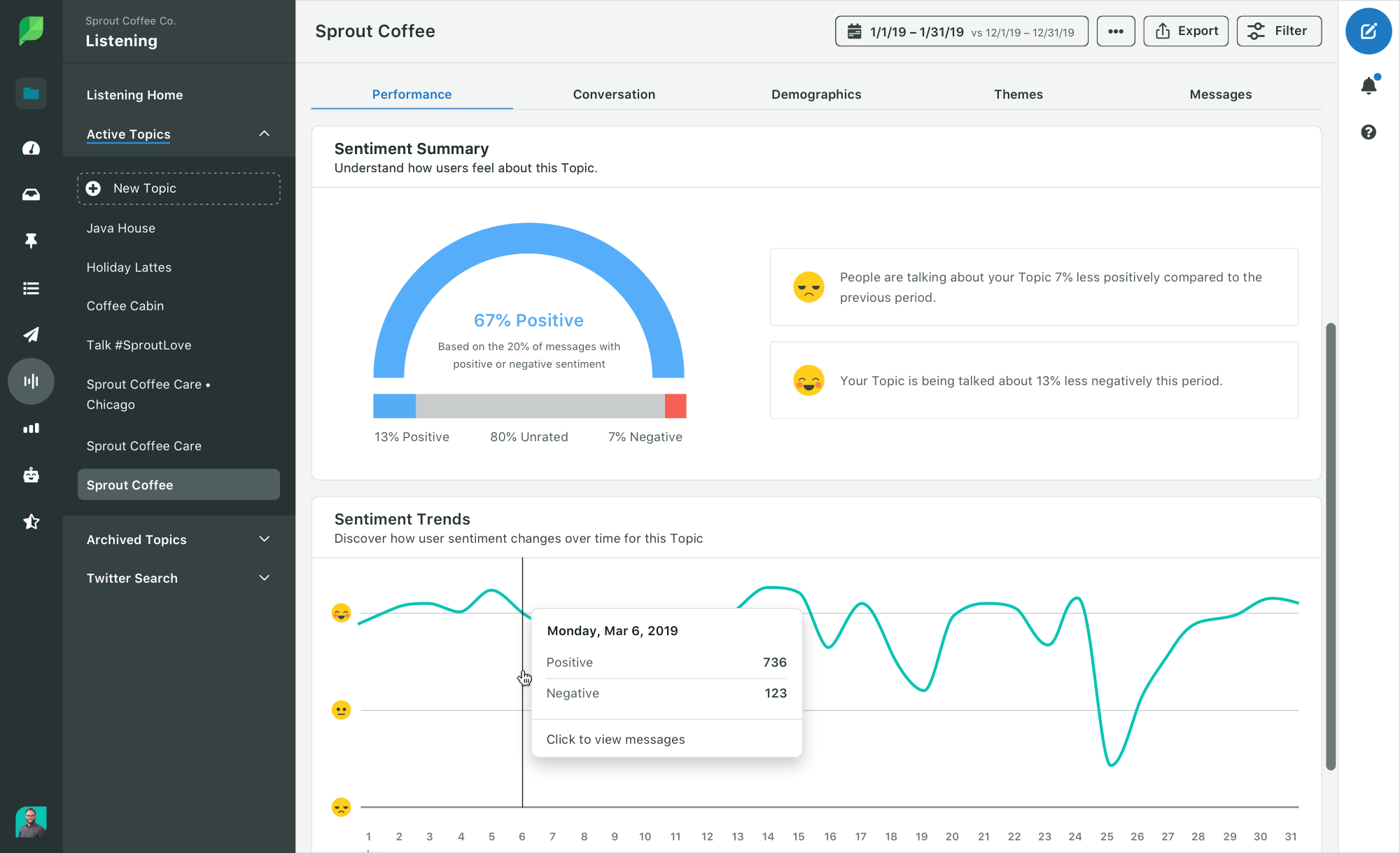
Social listening can help you monitor conversations and the sentiment around your brand, whether it be positive or negative. This can help you spot the beginnings of a crisis and potential issues that your customers might have before they blow up.

sentiment analysis

What does your social media crisis management plan look like?

Managing a social media crisis doesn’t have to be a nightmare.

Are they stressful? Absolutely.

That said, crises come with the territory of having a social presence.

Whether it’s the unpredictable or something out of your hands, brands today need to be equipped to respond. With the right social media tools and a crisis action plan, you can carry yourself with peace of mind.

And if you haven’t already, make sure to check out our social media crisis management guide for more tips on being prepared!

This post Social media crisis plan: What to do when things go wrong originally appeared on Sprout Social.


Source Sprout Social https://ift.tt/2ygsekO

How COVID-19 Is Impacting Social Media Ad Rates and Engagement

The COVID-19 pandemic has driven down social media advertising rates globally and has also led to a decline in engagement with campaigns, according to recent research from Social Bakers. Read the full article at MarketingProfs

Source MarketingProfs Daily: Social Media https://ift.tt/2UvJtap